
Common Island Hotel Booking Mistakes: A Comprehensive Editorial Analysis
The architecture of island hospitality is fundamentally distinct from mainland tourism, governed by a set of geographical and economic constraints that are often invisible to the casual traveler. Booking a hotel on a landmass surrounded by water introduces a layer of logistical friction that transcends mere room rates and amenities. The failure to account for these specific island dynamics—ranging from tide-dependent accessibility to the volatility of remote supply chains—is where most travel plans begin to fracture.
Planning a stay in these environments requires an analytical approach to “spatial logistics.” It is not enough to evaluate a property based on its digital footprint or proximity to a beach. One must understand the systemic relationship between the hotel and the island’s infrastructure. In many cases, a seemingly ideal reservation is undermined by a fundamental misunderstanding of how island economies function, particularly regarding the unbundled costs of transportation and the seasonal shifts in local environmental conditions.
This article serves as a definitive examination of the friction points inherent in island travel. By deconstructing the operational realities of remote resorts and boutique island stays, we can identify the patterns that lead to suboptimal experiences. The objective is to provide a framework for high-level travel planning that treats the booking process as a strategic exercise in risk management and logistical coordination, rather than a simple transactional event.
Common Island Hotel Booking Mistakes
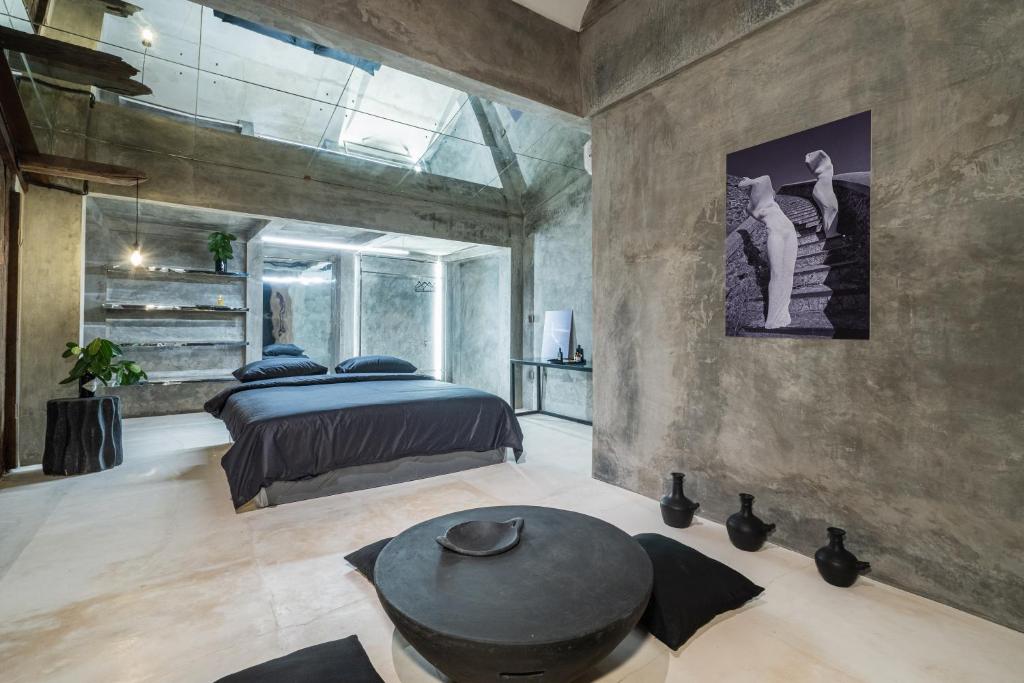
Understanding common island hotel booking mistakes requires a shift in perspective from consumerism to logistics. Many travelers approach island reservations with a mainland mindset, assuming that infrastructure is a constant and that proximity on a map translates to ease of access. This is a primary oversimplification. An “island” is not a uniform category; a volcanic island with steep cliffs presents entirely different logistical challenges than a coral atoll or a large inhabited archipelago.
One of the most frequent errors is the “distance-proximity paradox.” In island environments, five miles of distance can represent a two-hour journey depending on the terrain, the availability of paved roads, or the schedule of local boat transfers. Oversimplifying the booking process by ignoring these transit variables often leads to “logistical entrapment,” where the traveler spends a disproportionate amount of their time and budget simply moving between the hotel and necessary services.
Furthermore, many people mistake luxury for resilience. A high-priced resort is not immune to the systemic failures of its host island, such as power outages or water shortages. In fact, luxury properties often have higher “infrastructure debt” because they require more resources—air conditioning, fresh water, imported luxury goods—than the local environment can naturally provide. Booking without auditing the property’s self-sufficiency is a critical oversight in remote travel planning.
Deep Contextual Background: The Systemic Evolution of Island Tourism
Historically, island hotels were either local guesthouses or isolated colonial-era outposts. The late 20th century saw the rise of the “enclave” model—self-contained resorts designed to insulate the guest from the island’s logistical realities. This model created a psychological buffer, where the traveler was never required to understand the island’s mechanics. However, as tourism has shifted toward “experiential” and “boutique” travel, this buffer has thinned.
Today’s island hospitality landscape is a hybrid of global standards and local constraints. Digital booking platforms have democratized access to remote properties, but they have also stripped away the contextual warnings that traditional travel agents once provided. The result is a “transparency gap.” A hotel can present a pristine digital facade while omitting the fact that it is only accessible during high tide or that it sits adjacent to a noisy municipal desalination plant. The evolution of the industry toward unbundled, algorithm-driven bookings has made the traveler their own logistics manager, often without the necessary training.
Conceptual Frameworks and Mental Models
To avoid the most prevalent errors, travelers should apply these specific frameworks when evaluating island accommodations.
1. The “Transit-Buffer” Model
This model suggests that the true cost and time of an island stay are determined by the “last mile” of transit. If a hotel requires a private boat or a specialized 4×4 transfer, the booking is not just a room; it is a multi-modal transit contract. The model dictates that for every hour of international travel, one must account for a 30% time buffer for local island movement.
2. The Infrastructure Dependency Audit
Evaluate a hotel based on its “resource autonomy.” Does it produce its own power? Does it have a reverse-osmosis water plant? A property that is 100% dependent on the local grid is high-risk in developing or remote island nations. The more autonomous the property, the more resilient the booking is to external systemic failures.
3. The “Supply Chain” Perception
Recognize that every item in an island hotel—from the Egyptian cotton sheets to the limes in a cocktail—has a longer and more fragile supply chain than on the mainland. This model helps set realistic expectations for service and allows the traveler to understand why “all-inclusive” packages on islands often have lower quality thresholds than those in mainland hubs.
Key Categories of Island Properties and Trade-offs
Identifying the category of an island hotel is the first step in mitigating common island hotel booking mistakes. Each type of property carries specific inherent risks.
| Property Category | Access Model | Primary Trade-off | Resource Reliability |
| Integrated Enclave | Managed Transfer | High Cost / Low Autonomy | High (Proprietary) |
| Urban Island Hotel | Public Infrastructure | High Noise / Low Privacy | Moderate (Public) |
| Remote Boutique | Self-Managed / Boat | High Logistics / High Privacy | Low (Variable) |
| Eco-Lodge | Minimalist / Overland | Low Comfort / High Impact | Low (Sustainable) |
| Private Island Resort | Charter / Exclusive | Extreme Cost / Absolute Control | Maximum (Redundant) |
When deciding between these categories, the choice should be dictated by “Logistical Tolerance.” If the goal is relaxation, an Integrated Enclave is safer. If the goal is exploration, a Remote Boutique is superior, provided the traveler accepts the burden of managing their own transport and resource variability.
Detailed Real-World Scenarios
Scenario 1: The “Tidal Lockout”
A traveler books a luxury villa on a small islet, failing to check the nautical charts or the hotel’s transfer policy. They arrive at the mainland pier at 5:00 PM, only to find that the water is too low for the hotel’s boat to cross the reef.
-
Failure Mode: Ignoring the intersection of geography and schedule.
-
Second-Order Effect: The traveler incurs the cost of a last-minute mainland hotel and loses one night of their expensive island booking.
Scenario 2: The “Peak Season Gridlock”
Booking a popular island stay during a national holiday without realizing the local ferry system operates on a first-come, first-served basis rather than a reservation system.
-
Decision Point: Should they pay for a private helicopter transfer or wait six hours in the sun?
-
Constraint: High-demand periods on islands often exceed the physical capacity of the infrastructure (docks, roads, electricity).
Scenario 3: The “Digital Nomad” Infrastructure Gap
A professional books a long-term “workation” at a boutique hotel that advertises high-speed Wi-Fi. Upon arrival, they realize the island relies on a single undersea cable that has been damaged, or that the hotel’s bandwidth is shared across 40 guests using a single satellite link.
-
Compounding Risk: Inability to fulfill work obligations leads to financial and professional stress, ruining the leisure aspect of the trip.
Planning, Cost, and Resource Dynamics
The economic reality of island hotels involves a high degree of “hidden variability.” Direct costs are usually transparent, but indirect costs are often where the budget collapses.
| Expense Type | Direct/Visible | Indirect/Hidden | Variability |
| Transport | Room Rate | Speedboat/Seaplane Fees | High (Fuel Surcharges) |
| Dining | Menu Prices | “Import Duty” Markups | Moderate |
| Services | Booking Fee | Environmental Levies/Taxes | Low |
| Opportunity | Time Off | Transit Delays | High (Weather) |
The “Resource Scarcity” Premium
On an island, the hotel is often the sole provider of all resources. This creates a captive market. A common mistake is booking a “cheap” room at a resort where the only dining options are $80 per person per meal. The “Total Cost of Occupation” (TCO) must be calculated by adding the room rate to the projected daily F&B and transit costs.
Tools, Strategies, and Support Systems
-
Nautical and Topographical Mapping: Use tools like Google Earth and Navionics to see the actual terrain and reef structures. Do not rely on the hotel’s “artistic” map.
-
Infrastructure Verification: Contact the hotel directly to ask about their power backup and water source. If they are vague, assume the infrastructure is fragile.
-
The “Reverse-Booking” Strategy: Secure the inter-island transit (flights/boats) before finalizing the non-refundable hotel room.
-
Redundancy Planning: Always book the first night on the mainland if arriving after 3:00 PM. This mitigates the risk of missing the final island transfer of the day.
-
Local Intelligence: Use social media “check-ins” (not just official reviews) to see real-time photos of the water clarity, construction noise, or beach erosion.
Risk Landscape and Failure Modes
The risk landscape of island travel is characterized by “Compounding Delays.” Because island logistics are often a single-track system (one boat, one road, one plane), a failure at the beginning of the chain cascades.
-
Environmental Risks: Saltwater corrosion affects everything. Even “new” hotels can have failing air conditioners or plumbing due to the harsh maritime environment.
-
Geopolitical and Economic Risks: Remote islands often experience sudden changes in permit laws or environmental taxes that the hotel may pass on to the guest.
-
Safety and Medical Lag: A common booking mistake is staying on a remote island without checking the distance to the nearest decompression chamber (for divers) or trauma center.
Governance and Long-Term Adaptation
For frequent travelers or those planning complex multi-island itineraries, a “review cycle” is essential. This is the process of updating your travel assumptions as the environment changes.
Layered Checklist for Island Governance:
-
Pre-Booking (Audit): Check seasonal wind patterns (windy sides of islands have more debris and rougher water).
-
Confirmation (Logistics): Obtain a written transfer confirmation with a contact number for the boat captain/driver.
-
Arrival (Verification): Upon check-in, confirm the departure logistics immediately, as island weather can shift suddenly.
Measurement, Tracking, and Evaluation
How do you evaluate if an island booking was successful? It goes beyond “having a good time.”
-
Quantitative Signal: The “Transit-to-Leisure” ratio. If you spent more than 20% of your waking hours in transit, the booking strategy was flawed.
-
Qualitative Signal: The “Friction Level.” Did you feel like you were fighting the island’s systems, or were you integrated into them?
-
Documentation Examples:
-
Keep a “Logistics Log” of transfer times to better plan future trips.
-
Save screenshots of “Amenity Promises” to negotiate refunds if infrastructure (like the pool or Wi-Fi) is non-functional.
-
Common Misconceptions and Oversimplifications
-
Myth 1: “The hotel will pick me up.” Reality: Many boutique hotels outsource transfers; if the third party fails, the hotel often disclaims responsibility.
-
Myth 2: “All beaches are public/accessible.” Reality: High tides can completely swallow a beach, leaving the hotel with no usable shoreline for half the day.
-
Myth 3: “Island weather is the same everywhere on the island.” Reality: Micro-climates mean the “leeward” side can be sunny while the “windward” side is raining.
-
Myth 4: “I can find a taxi at the pier.” Reality: Many islands have no formal taxi system; if you haven’t pre-booked a transfer, you are stranded.
-
Myth 5: “The water is always swimmable.” Reality: Seasonal “jellyfish seasons” or “sea urchin blooms” can make the water inaccessible despite looking perfect.
Ethical and Contextual Considerations
Booking an island hotel carries a responsibility to the local ecosystem. A common ethical mistake is booking at a resort that consumes a disproportionate amount of the island’s fresh water or electricity at the expense of the local village. Researching a hotel’s waste management and employment practices is not just ethical; it is practical. Hotels that treat the local community well are generally safer and more resilient during crises.
Conclusion
The avoidance of common island hotel booking mistakes is found in the transition from passive consumer to active analyst. An island stay is a complex interaction with a fragile and beautiful system. When we treat the booking process as a logistical challenge to be solved rather than a product to be bought, the quality of the experience increases exponentially.
Success is not defined by the absence of challenges—islands will always be unpredictable—but by the resilience of the plan. By auditing infrastructure, calculating total costs, and respecting the geographical constraints of the landmass, the traveler can move from a state of vulnerability to one of mastery. The goal is to arrive not just as a guest, but as an informed participant in the island’s unique rhythm, ensuring that the stay is defined by the environment’s beauty rather than its logistical failures.